
Integration Is More Than Speaking English: Understanding the Systems That Shape American Life
Language proficiency is essential, but successful integration also requires understanding how schools, workplaces, healthcare, education, and other American institutions operate. Knowing the words matters. Knowing what the institutions are telling you can matter even more.
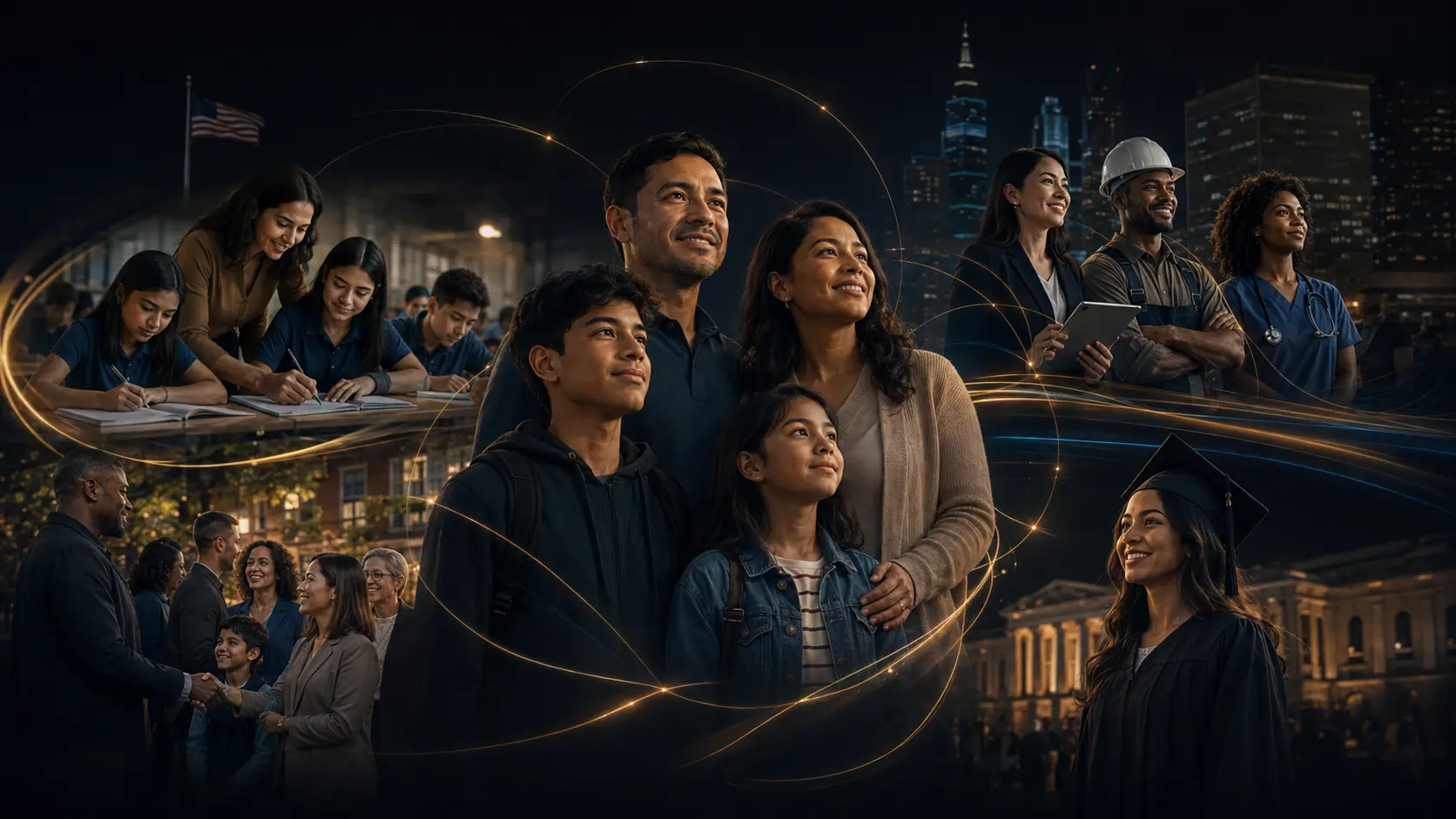
A person can learn the English language and still remain confused by the systems operating around them.
This distinction is easy to overlook.
An immigrant may understand every word in the phrase "grade point average" without understanding how GPA affects college admissions. A parent may understand a counselor's explanation of Advanced Placement courses without knowing why course rigor matters several years later. A worker may understand the words in an employee-benefits presentation while having no previous experience with a 401(k), health-insurance deductible, or employer-sponsored retirement plan.
Language provides access to information, but cultural and institutional knowledge helps people understand what that information means.
That is why integration is larger than translation.
Consider education. The United States contains public schools, charter schools, magnet programs, career and technical education, community colleges, universities, apprenticeships, dual enrollment, scholarships, grants, standardized tests, and countless local variations. Families raised inside the system may find it complicated. For someone arriving from a completely different educational structure, it can be overwhelming.
The same is true of professional life. Workplace expectations involving interviews, resumes, networking, benefits, promotions, professional communication, and employee rights may differ substantially from those in another country.
Healthcare introduces another institutional language involving insurance networks, deductibles, primary-care providers, urgent care, emergency rooms, referrals, prescriptions, and preventive care.
English proficiency makes these systems easier to navigate, but explicit cultural education can accelerate understanding even further.
This distinction is important because immigrants do not arrive in the United States as blank slates. They arrive with knowledge acquired inside other societies. They know how schools, workplaces, banks, governments, healthcare, and professional relationships operated where they previously lived.
Then they enter a new institutional environment.
Many mistakes are therefore not caused by lack of intelligence or effort. They occur because someone reasonably assumes that a familiar process works in the same way here.
The consequences can be significant.
A parent waits too long to investigate college because applications worked differently in the home country.
A professional assumes a foreign credential will automatically be recognized.
A worker never asks about advancement because promotion operated differently in a previous workplace culture.
A family assumes college is unaffordable because no one explains financial aid.
Integration improves when people are given both language and context.
This is one reason First Language extends beyond traditional ESL instruction. English acquisition remains foundational, but communication becomes more valuable when it is connected to the institutions learners are actually trying to navigate.
For parents, that may mean understanding schools.
For students, it may mean understanding career and college pathways.
For workers, it may mean understanding workplace expectations and professional mobility.
For families, it may mean developing greater confidence interacting with institutions independently.
This process benefits American institutions as well.
A school can communicate more effectively with a parent who understands both the language and the significance of the information being provided. An employer can develop an employee more successfully when workplace expectations are understood. Communities benefit when residents can navigate services and institutions without unnecessary barriers.
The United States is a country built around institutions that reward participation, but participation often requires knowledge.
That knowledge is not automatically acquired at the border.
It develops through experience, education, language, and interaction.
The faster immigrants gain access to that understanding, the sooner their existing skills, ambitions, and abilities can be connected to the opportunities around them.
Integration is therefore not a demand that someone erase where they came from.
It is the process of becoming capable of moving confidently within where they are now.
English opens the conversation.
Understanding the system helps people participate in it.